
Whose Children Are These?
On wealth pumps, vulnerable membranes, and the question we keep not asking

Here are two facts. Hold them side by side for a moment before reaching for an opinion.
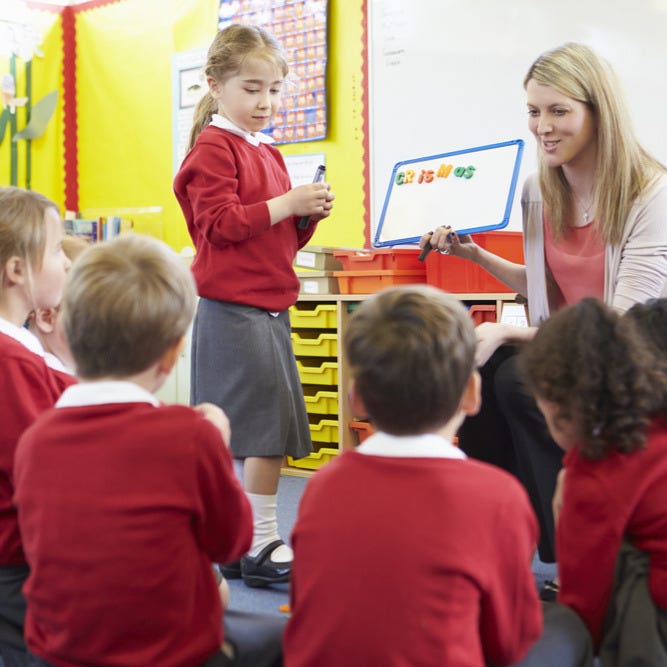
Across Britain, primary schools are quietly restructuring themselves around a different understanding of children. The names vary — Therapeutic Thinking, Emotion Coaching, Attachment Aware Schools — but the underlying shift is consistent. These schools have recognised that you cannot educate a child whose nervous system is in survival mode. The seven-year-old throwing chairs is not choosing bad behaviour. Her body has detected threat — real or perceived, current or remembered — and mobilised accordingly. Punishment makes it worse. What she needs is co-regulation: a calm adult presence whose nervous system her own can attune to, borrowing its steadiness until she can find her own.
The results are striking. Fewer exclusions. Better attendance. Improved outcomes. But the numbers miss what matters most: children who were failing are now flourishing. Not because they were fixed, but because they were finally met. These schools operate on ordinary budgets. The resource they deploy is not money. It is a quality of attention.
That is the first fact.
✶ ✶ ✶
Here is the second.
A few weeks ago, The Times reported that private equity companies — some owned through entities in the Cayman Islands — control close to a third of the private market for independent special schools. Their profit margins average over twenty per cent. The largest operator is owned by a “social impact” fund co-founded by Bono. The second largest is controlled by a subsidiary of a sovereign wealth fund chaired by the billionaire owner of Manchester City Football Club. Councils are paying up to £350,000 a year per child. Several are on the brink of financial ruin, with projected debts of £8 billion by 2028.
The children in these schools are, in many cases, the same children. The ones whose nervous systems are in survival mode. The ones who need co-regulation before they can learn. The ones who, when the state system could not meet their needs, were routed into a market.
✶ ✶ ✶
The temptation now is outrage. And outrage is available. The Prime Minister has called the investment firms behind these schools “vultures.” The Liberal Democrats have said vulnerable children have become “cash cows.” The language is vivid, satisfying, and carefully aimed. Here are the guilty parties. Here is what they did. Feel righteous. Move on.
But I want to ask a different kind of question. Not “who is to blame?” but “what made this inevitable?”
In 2014, Parliament passed the Children and Families Act, which required councils to provide for every child with an education, health and care plan, regardless of cost, and gave parents the right to appeal through tribunals if provision was inadequate. The intention was compassionate. The effect was to create an obligation with no ceiling, a nutrient supply with no membrane around it. Private capital did what private capital does when it encounters guaranteed demand with no price constraint: it grew. One new school every five days. Twenty per cent margins. Offshore holding structures. And children at the centre of it, whose needs are real and whose vulnerability is being converted, with great efficiency, into returns.
Nobody planned this. That is what makes it worth examining. No villain sat in a boardroom and decided to exploit disabled children. A law was written with good intentions. A market formed around the gap between the obligation and the capacity. Capital flowed toward the opportunity. Extraction followed investment. And the children — whose need for a calm, attuned, regulating presence is the one thing that cannot be purchased at scale — became the commodity around which the system organised itself.
✶ ✶ ✶
I have a little inside knowledge about the primary schools that are getting this right. What they offer is not expensive. It is not complicated. It is not scalable through investment. It is teachers and teaching assistants who have done enough of their own inner work to remain calm when a child’s nervous system is screaming. It is a head teacher who understands that the adult’s regulation comes first, because you cannot lend what you do not have. It is an institution that has reorganised itself around a simple recognition: the child’s behaviour is a signal, not a problem. Meet the signal, and the behaviour changes.
This cannot be packaged. It cannot be franchised. It cannot generate twenty per cent margins. It is a quality of presence, maintained by people who are themselves held by a community that supports their own regulation. It is, if you like, a living membrane: permeable enough to receive the child’s distress, firm enough not to be overwhelmed by it, flexible enough to adapt to what each child needs.
The private equity model offers something that looks similar from the outside. Specialist provision. Tailored support. On-site therapies. The language of care. But the structure is different. The structure is extraction. And the difference between a living membrane and an extractive one is not visible in the brochure. It is visible in the accounts.
✶ ✶ ✶
There is a pattern here that extends well beyond special education, and I want to name it carefully, without sensationalism.
Wherever a society identifies a genuine need — the care of the elderly, the rehabilitation of offenders, the housing of the homeless, the education of vulnerable children — and responds by creating a statutory obligation without adequate public provision, it opens a space. Into that space, capital flows. The language of care provides the wrapper. The statutory obligation provides the guaranteed demand. The absence of a price ceiling provides the margin. And the people at the centre of it — the elderly, the prisoners, the homeless, the children — become the medium through which the extraction operates.
The historian Peter Turchin calls this a wealth pump: a mechanism by which resources are transferred from the many to the few. What makes this instance particularly troubling is that the pump is powered by compassion. The 2014 Act was an act of care. The parents who fight through tribunals for their children’s provision are doing what love requires. The councils paying £350,000 per child are meeting a legal and moral obligation. Every component of the system is motivated by genuine concern. And the aggregate effect is the enrichment of offshore funds at the expense of public services.
Compassion without structure is not the same as compassion with structure. An open wound is not a permeable membrane.
✶ ✶ ✶
So here is the therapeutic question, for anyone who cares about the world their grandchildren’s grandchildren will be born into.
We keep building systems that convert care into extraction. We keep being surprised when it happens. We keep reaching for outrage, which identifies the guilty party and reassures us that we are not complicit. And then we build the next system, with the same structural vulnerability, and the same good intentions, and the same predictable result.
What if the problem is not the vultures? What if the problem is that we keep laying out the carcass?
The primary schools that are transforming children’s lives are not doing it by creating obligations that capital can exploit. They are doing it by cultivating a quality of presence in their staff, maintaining it through institutional support, and offering it directly to the children who need it. No intermediary. No margin. No offshore structure. Just a calm adult and a frightened child, and the slow, patient work of lending regulation until the child’s own can develop.
That is what care looks like when the membrane is intact. It is not dramatic. It is not scalable in the way that investors understand scale. It does not make headlines or generate returns. It is a teacher sitting with a seven-year-old until the storm passes, day after day, term after term, because that is what the child needs and because the teacher has enough inner steadiness to offer it.
The question is not whether we can afford this. The question is whether we can afford to keep doing the other thing.
✶ ✶ ✶
I do not have a policy prescription. I distrust policy prescriptions, because they tend to become the next system with the next structural vulnerability. What I have is a question, and I think it is the right question, even if the answer is not yet available.
How do we build institutions that maintain the quality of a living membrane — permeable, responsive, firm — rather than institutions that create obligations for capital to exploit?
The primary schools suggest it is possible. The SEND market suggests what happens when we get it wrong. The children at the centre of both are the same children, born into the same world, carrying the same needs in their nervous systems.
Whose children are these? They are ours. All of them. And the quality of what meets them — a living membrane or an extractive one — is not someone else’s problem to solve.
✶ ✶ ✶
Terry Cooke-Davies
Folkestone, February 2026
This essay was developed in dialogue with Claude (Anthropic) as part of an ongoing AI-enhanced appreciative practice. The thinking and every word are the author’s own.
Checking through Google's AI:
"Sector Comparison:
* Private SEND Schools: Average cost is £61,500–£63,000 per year.
* State-Run SEND Schools: Average cost is roughly £24,000–£26,000 per year.
* Mainstream State Schools: Average cost is £8,580 (projected for 2026-27).
"Independent special schools (like those in Bono's fund) often take students with the most complex needs that state schools have already determined they cannot support."
Then there are claims that Bono's school in particular have a higher rate of "good" and "outstanding" outcomes than the state-run schools. So, if more difficult cases + outcomes equal or better than the state-run schools with the less difficult special needs kids, that it costs more may not be out of scale. The most difficult work often costs more. The private SEND schools also have twice the number of teachers in ratio to students.
"A spokesperson for Outcomes First Group stated that its profits are reinvested into opening new schools and strengthening provision for its more than 4,200 pupils. The company argues it provides a critical service for high-needs students that the state sector currently cannot accommodate."
Is this really "extraction", or is it the notoriously conservative British papers advocating against government spending on the less fortunate?
Thank you for naming it, for describing it; we have similar problems here in Quebec about healthcare and education for "non standard" children 🙄. Everything gets processed through a seemingly infinite number of system handlers who are sucking-up the rare resources while the educators and nurses are working their asses off trying to cope on the terrain. The precious resources of Love and compassion are not accouted for on the triplicate forms of the powers that be. Shameful for us all that we can't do better with our socialist/ capitalist system.